01Overview
ADU Cost in Los Angeles at a Glance
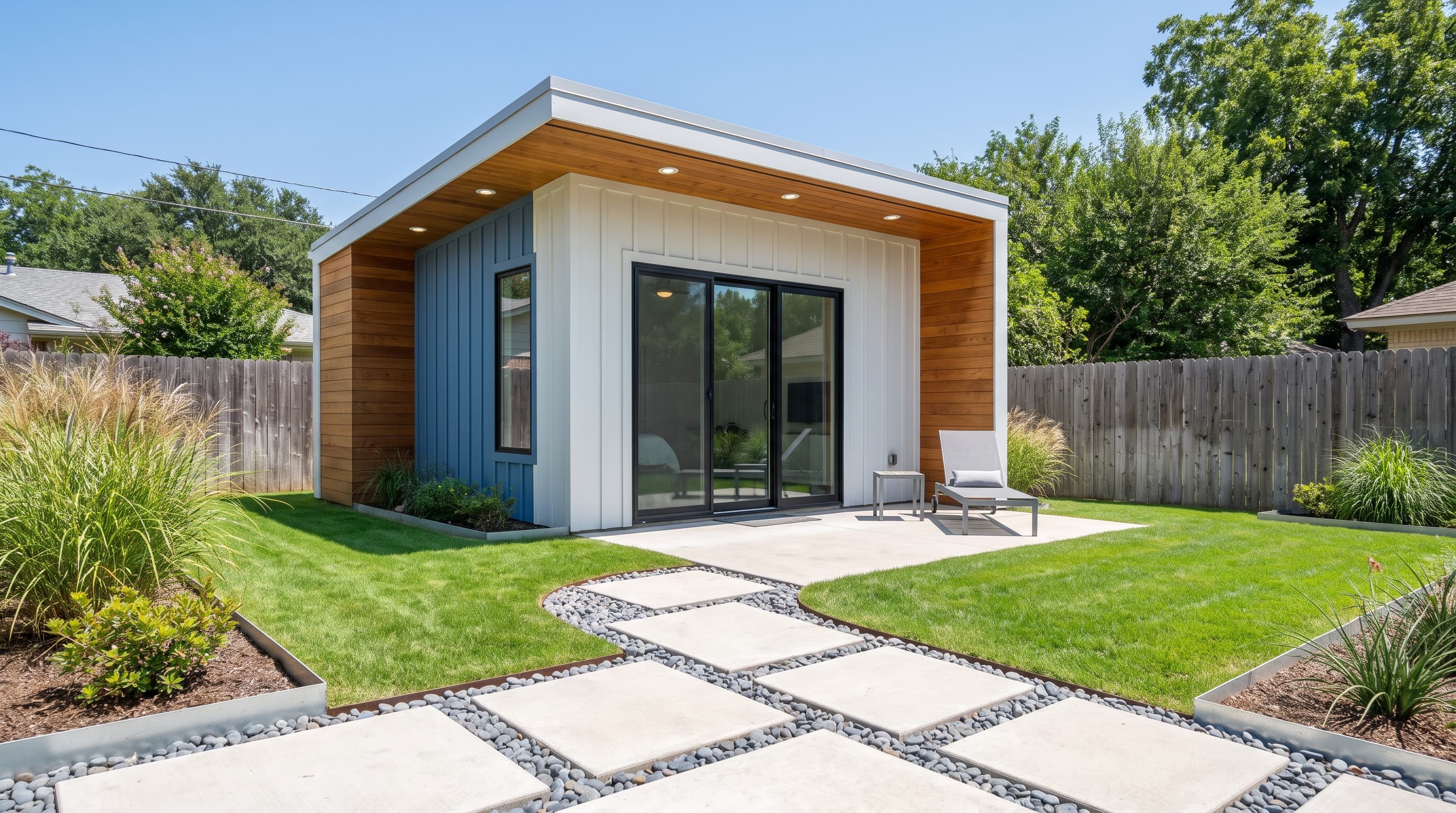
ADU cost depends on type and size.
ADU cost in Los Angeles starts at $60K for a Junior ADU. Final price depends on your lot, scope, and finishes.
Starting at $60K · Real Numbers, No Ranges · Fixed-Price Transparency
Your adu cost in Los Angeles depends on type and ranges from $60K to $150K. Since 2009, we have built 200+ ADUs with transparent pricing.
The budget depends on size, lot condition, and finishes. For example, a garage conversion costs less than building on bare ground. Slope and soil affect foundation work. Quality finishes also raise budget. We provide starting prices for each type. In addition, your free estimate includes a detailed breakdown of design, permits, construction, and labor. Therefore, no hidden costs.
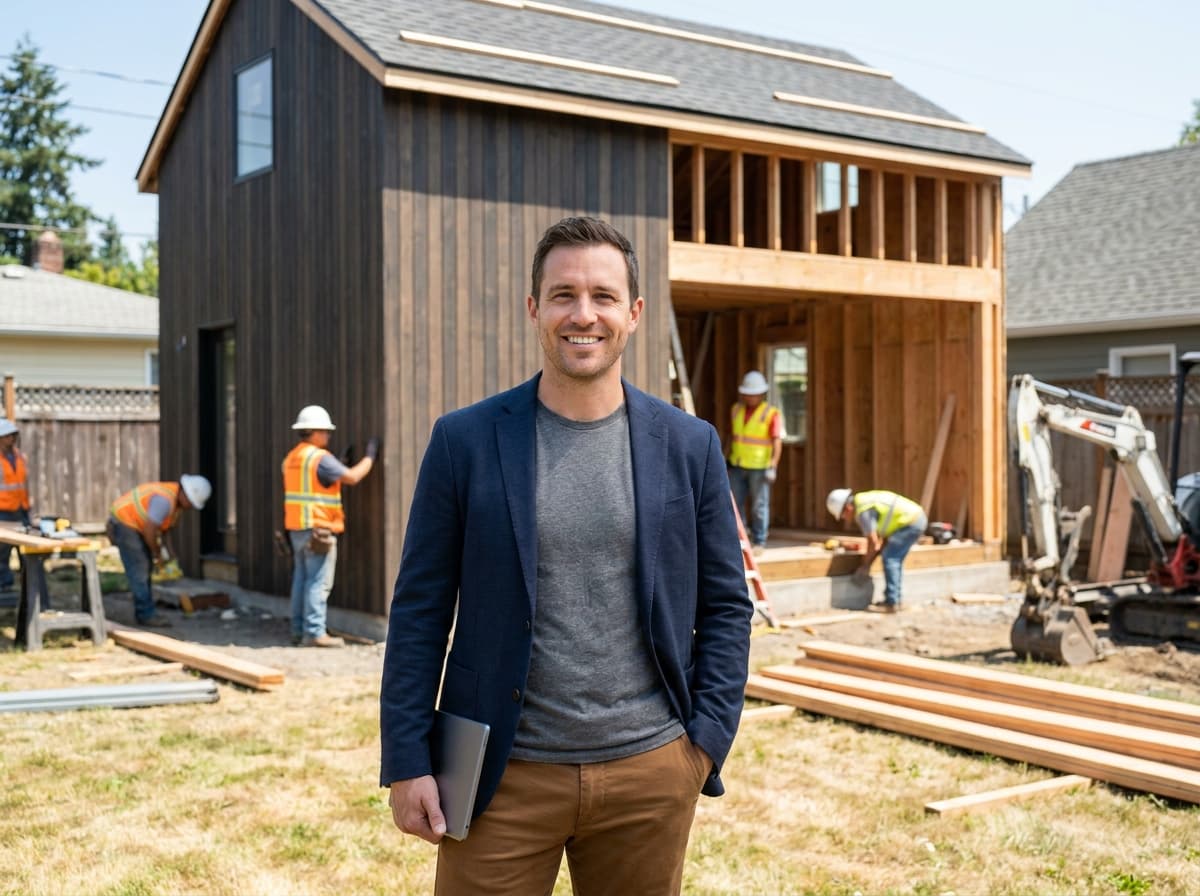
ADU cost depends on type and size.
First, a Junior ADU starts at $60K. Next, garage conversion starts at $95K. An attached ADU starts at $120K. Finally, detached starts at $150K. These figures cover design, engineering, permits, and construction. Therefore, final cost rises if your lot has poor soil, steep slope, distant utilities, or premium finishes.
The price covers the complete project. Since we handle everything from site assessment through Certificate of Occupancy, everything is included. Labor, materials, and inspections are bundled. As a result, your free assessment includes a fixed quote. We measure your property and review site conditions carefully.
Last updated November 2026.
Starting prices are real numbers from completed projects in LA County. Final cost depends on site, scope, and finishes. Request your free fixed quote.
Each ADU type has a different starting price.
Since construction methods vary, the difference reflects foundation work and building process.
| ADU Type | Starting Price | What Drives Cost |
|---|---|---|
| Junior ADU | $60K | Existing lot, minimal site prep. Best for small properties. |
| Garage Conversion | $95K | Uses existing slab and structure. No new foundation needed. |
| Attached ADU | $120K | Shares one wall with main house. More space than garage conversion. |
| Detached ADU | $150K | Standalone unit. Requires new foundation and full site prep. |
ADU size ranges from studio to two-bedroom.
When units are larger, they cost more to build but generate higher rental income.
First, studio ADUs are typically 500 to 700 square feet. Since studio units rent for $1,200 to $1,800 monthly, they suit single renters or couples well.
Next, one-bedroom ADUs are 700 to 900 square feet. Rents are $1,800 to $2,400 monthly. Notably, this is the most common type.
Finally, two-bedroom ADUs are 900 to 1,200 square feet. Rents are $2,400 to $3,200 monthly. Since these attract families, they command higher rates. In fact, they cost 20% to 30% more to build than one-bedroom units.
Your lot determines what you pay.
In fact, site condition is the biggest cost lever.
Flat lots cost less. When slope is steep, retaining walls, grading, and modified foundation design are required. If you have hillside ADU in Los Angeles, expect to add $10K to $20K.
Soil testing reveals bearing capacity and moisture. Because weak soil requires deeper foundations, reinforcement is needed. If water, sewer, or electrical connections are distant, trenching and labor costs increase.
If your property lacks adequate electrical service, we upgrade the main panel. Since adding a separate subpanel costs $2K to $5K, budget accordingly. When plumbing runs to distant connections, costs are higher.
Standard finishes keep costs down. However, premium flooring, counters, or exterior materials raise the price. Tile costs more than vinyl. Similarly, stainless steel costs more than basic fixtures.
Every budget splits into design and permit fees, construction, and site work. Still, utility connections catch many owners off guard.
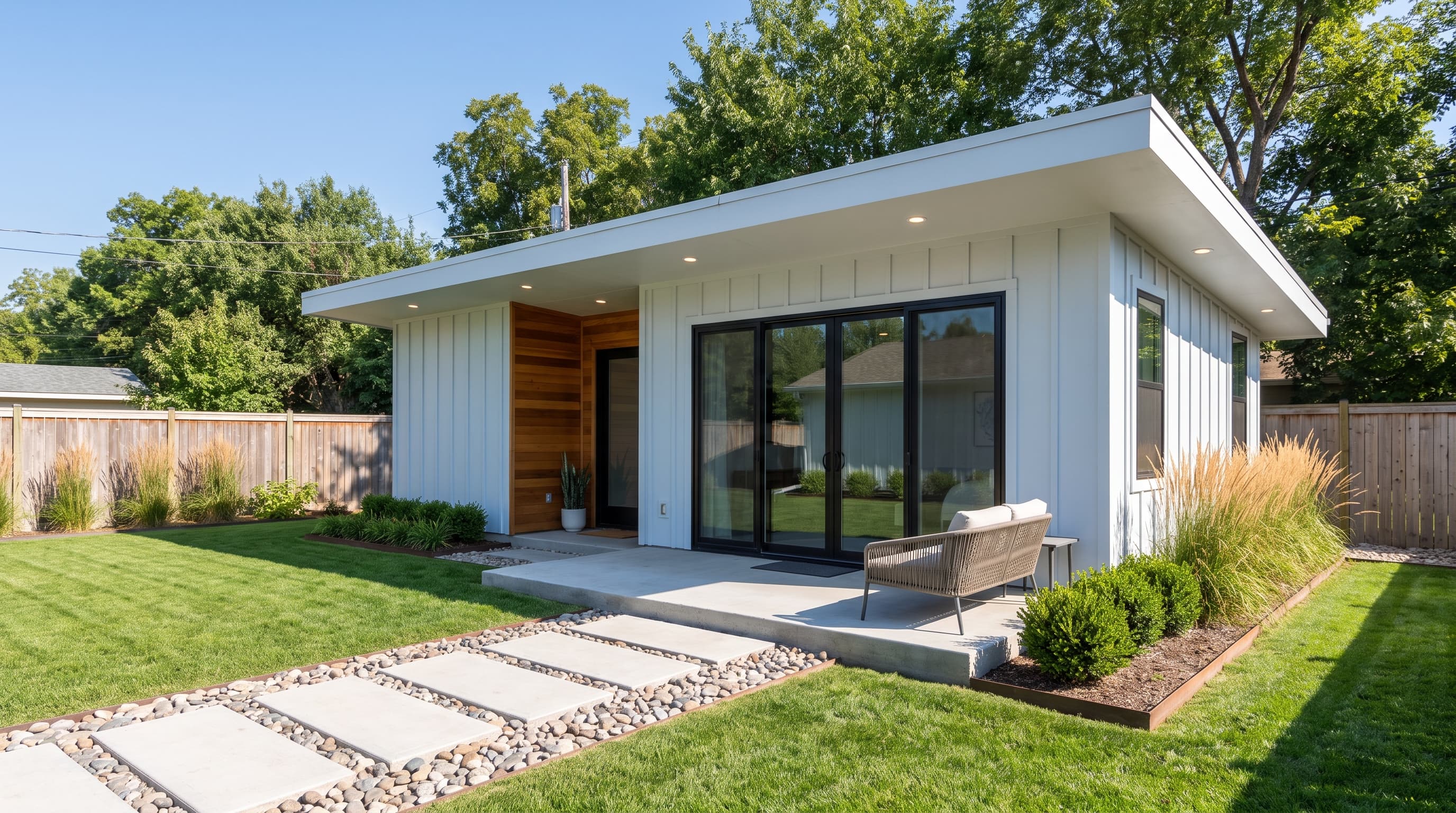
Soft costs are professional services and government fees.
Therefore, they sit above the construction budget.
Design and engineering are included in our all-in price. As a result, we create permit-ready plans, 3D renderings, and detailed calculations. This takes 3 to 4 weeks.
Permit fees vary. LADBS permits cost $500 to $1,500 depending on project scope. Plan check fees are based on valuation. In addition, we manage all LADBS coordination and respond to correction notices.
Also included are utility connections, sewer fees, and school impact fee assessments. ADUs under 750 square feet pay no school impact fee, which saves money.
Hard costs are materials and labor.
Therefore, they dominate your budget.
First, foundation includes excavation, concrete, and reinforcement. A new foundation costs $8K to $15K. However, a garage conversion reuses the existing slab, cutting cost by 40%.
Next, framing adds walls, roof, windows, and doors. This is the longest phase. Roof trusses, sheathing, and exterior cladding run $20K to $35K.
Finally, MEP is mechanical, electrical, and plumbing. HVAC, wiring, panels, water lines, and drainage add up. MEP costs $12K to $20K. Although Title 24 energy compliance adds cost, it saves renters long-term.
Therefore, budget for them from the start.
First, water and sewer connections depend on lot location. If your main line is close, connection costs $2K to $5K. However, distant connections require trenching, adding $5K to $15K.
Second, electrical service upgrades are common in older homes. A new main panel costs $2K to $5K. Additionally, a separate subpanel for the ADU costs another $1K to $2K.
Third, slope work and retaining walls are site-specific. Steep lots may need walls costing $3K to $10K. In contrast, flat lots typically avoid this.
Finally, driveway and lot preparation may be needed. Grading, paving, or drainage work runs $2K to $8K. Also, we include site plan review in the free estimate.
Both are legal options.
However, the choice depends on your lot and timeline.
| Factor | Garage Conversion | Detached ADU |
|---|---|---|
| Starting Cost | $95K | $150K |
| Timeline | 16 to 20 weeks | 20 to 28 weeks |
| Foundation | Existing slab | New foundation |
| Site Prep | Minimal | Grading, utilities |
| Best For | Tight budgets, fast rental | More space, flexibility |
Since we publish actual numbers based on 200+ completed projects, there's no guessing or inflated ranges.
One contract covers design, permits, and construction. After your free site assessment, you get a fixed quote. Therefore, no change orders.
We hold a California general contractor license. As a result, all work meets LADBS code and Title 24 compliance.
You get one point of contact from assessment through Certificate of Occupancy. Additionally, weekly written updates keep you informed.
We visit your property and measure the lot. Additionally, we test soil if needed and assess utility access. This takes 1 to 2 hours. Includes a preliminary design sketch.
We prepare a detailed cost breakdown. This includes design, permits, foundation, framing, MEP, finishes, and labor. Each category is itemized separately. This takes 3 to 5 business days.
You review the estimate and design carefully. Next, we lock in the price and scope. The contract specifies what is included. It protects both of us. No hidden costs after signature.
Once approved, we begin design and LADBS permits. Construction follows permit approval. Final inspection gives you the Certificate of Occupancy and keys to your new ADU.
Smart choices early keep the total down. In addition, rental income can repay a large share of the investment over time.
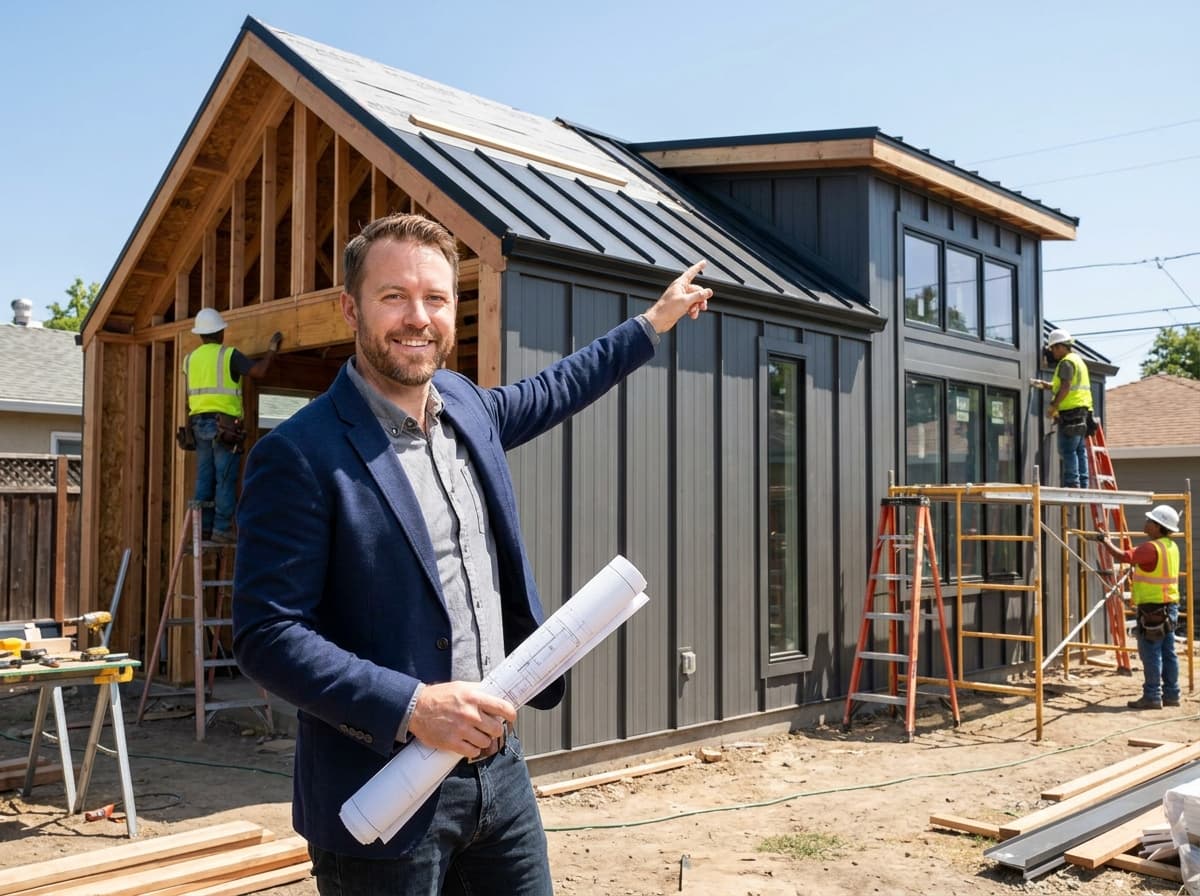
Prefab and stick-built both work.
In Los Angeles, costs are comparable.
Built on-site from the ground up. This is the standard approach. Because we price site conditions upfront, cost is predictable. Timeline is 20 to 28 weeks for a detached unit.
Built off-site in a factory, then delivered to your lot. Assembly is faster on-site. However, delivery, crane, and foundation setup add fixed costs. Permits are the same. Timeline is 18 to 26 weeks. Starting cost is $130K.
Stick-built and prefab start at similar prices in LA. Since prefab saves 2 to 4 weeks, timeline matters. On-site unknowns favor prefab. If your soil is difficult or utilities are distant, prefab avoids uncertainty.
Budget constraints are real.
Therefore, here are ways to reduce expense.
Most homeowners also use construction loans, HELOCs, or refinancing. See ADU financing options and the $40K CalHFA grant.
Reusing an existing structure cuts cost by 40% compared to a detached build. You skip new foundation, grading, and site prep work.
Basic flooring, drywall, and fixtures keep cost low. Upgrade later if needed. Laminate, vinyl, and builder-grade fixtures are durable and affordable.
A 600 sq ft unit costs less than 900 sq ft. Both rent well. Maximize the footprint you have with efficient layout.
If water, sewer, or electrical are close, cost drops. Before you buy or design, have utilities marked and assessed.
The state ADU grant is up to $40K. You do not repay it if you rent the ADU for 10 years. Learn more about ADU financing.
An ADU pays for itself through rent.
Most projects return the investment in 5 to 8 years.
Many LA ADUs rent for about $2,000 to $4,200 per month. For example, a $95K garage conversion rents for $1,800 to $2,400 monthly. This means annual gross rent is $21K to $29K. Also, rental cost basis is the project cost less land value.
Importantly, rental income also increases property value. An ADU typically adds 15% to 25% to overall property value. Therefore, lenders factor in the rental income when refinancing or selling.
Finally, maintenance and vacancy are factored in by property managers. Budget 5% to 8% for vacancy and 8% to 12% for maintenance. Ultimately, net income drives cash-on-cash return.
Starting prices only. Final cost depends on site, scope, and finishes. Request your free fixed quote.
We visit your property and measure the lot carefully. Additionally, we assess utilities and provide a fixed price quote. Since there's no obligation, you get a custom design sketch and detailed cost breakdown.
Answer a few questions about your lot and needs. Then, get a personalized design and price estimate.
Also in LA: Silver Lake · Mar Vista · and every LADBS neighborhood
View all locationsADU cost FAQs
Starting prices depend on the ADU type. A Junior ADU starts at $60K, and a garage conversion starts at $95K. Next, an attached ADU starts at $120K, while a detached ADU starts at $150K. However, final cost depends on your lot, scope, and finishes. For example, slope, soil, and utility distance can all move the price. Therefore, a free assessment gives you the most accurate number. After that visit, we send a line-item estimate for your property. Request yours today and compare it with the starting figures above.
Our price covers the full build, from first sketch to final inspection. Specifically, it includes design, engineering, LADBS permits, plan check, foundation, framing, and MEP systems. Finishes and the final inspection are part of the contract too. Because one contract covers every step, you avoid surprise add-ons. However, extras you request later, such as upgraded finishes, can change the price. In addition, your line-item estimate lists each category separately. As a result, you can see exactly where each dollar goes before you sign.
Your lot is the biggest factor. For example, a flat lot with close utilities costs less to build. Steep slopes need retaining walls and deeper foundations. Likewise, weak soil adds engineering and concrete. Distant water, sewer, or power lines also add trenching. Finishes matter too, since premium tile and counters cost more than standard options. Therefore, two ADUs of the same size can carry very different prices. Our free assessment identifies these site factors early, so your estimate reflects your real property.
Yes, permit costs sit inside your estimate. We prepare the plans and file them with LADBS. Next, we pay plan check fees and answer any correction notices. Because the estimate itemizes each fee, you see the full permit line. Meanwhile, state law exempts ADUs under 750 square feet from impact fees. This can lower your total. Typical approval for straightforward projects takes about 8 to 16 weeks. Therefore, we start permitting early to keep your schedule on track. Also, our project manager tracks every step.
Yes, most homeowners finance an ADU. Common options include a construction loan, a HELOC, a cash-out refinance, or a renovation loan. In addition, the CalHFA grant offers up to $40K for qualifying owners, with a rental commitment. Because rules change, check the current terms at [CalHFA](https://www.calhfa.ca.gov). Meanwhile, we give lenders clear plans and a line-item budget. As a result, applications move faster. Read more in our [ADU grants and financing guide](/services/california-adu-grants). However, loan terms vary, so ask each lender about fees. Then compare lenders before you commit.
Rent depends on location, size, and finish level. Many LA ADUs rent for about $2,000 to $4,200 per month. Coastal cities usually command higher rates than inland areas. However, a smaller unit rents for less than a larger one. For example, a studio suits a single renter, while a two-bedroom suits a family. Therefore, check nearby listings before you set a target. In addition, a local property manager can price the unit accurately. Finally, rent income can help offset your build cost.
A Junior ADU has the lowest starting price at $60K. However, a garage conversion at $95K skips most new construction. Because it reuses your existing slab and structure, you skip a new foundation. In addition, you avoid most grading and site prep. State law also removes replacement parking when a garage becomes an ADU. As a result, a conversion is often the fastest path to a rental. Still, your garage condition matters, so we inspect it first. Request a free assessment to confirm.
The free site visit usually takes 1 to 2 hours. During it, we measure your lot and check utility access. Next, we prepare a line-item estimate in 3 to 5 business days. After that, you review the scope with your project manager. Once you approve it, we lock the price into one contract. As a result, the whole process from visit to contract takes about 1 to 2 weeks. However, complex lots can take longer. Therefore, send us your questions early.
Yes, your estimate separates both. Hard costs cover materials and labor, such as foundation, framing, and MEP systems. Soft costs cover design, engineering, permits, and fees. Because we itemize each category, you see where the money goes. For example, a garage conversion shows a smaller foundation line than a detached ADU. In addition, we flag allowances for finishes. Therefore, you can adjust the scope before you sign. Finally, ask any contractor for the same detail, since a good quote lists every line.
Five factors move the price most. First, soil and slope shape the foundation. Second, distance to water, sewer, and power adds trenching. Third, older homes often need an electrical panel upgrade. Fourth, finishes and fixtures change the budget quickly. Finally, the ADU type sets the starting point. Therefore, walk your lot and note where utilities run. Also, gather any survey or soil report you own. In addition, our team will review everything during your free assessment, then recommend ways to stay on budget.
Review these factors before your free assessment to prepare.
Lot geometry affects ADU placement and cost. Smaller or sloped lots add expense
We measure and map your lot during the site visit and note any constraints
Distant utilities add cost. Close connections save money. Shared infrastructure can complicate things
We verify utility access during the assessment and quote connection costs
Some lots have setback covenants or utility easements. These affect design and cost
We review zoning and deed restrictions as part of the free assessment
Poor soil requires deeper foundation or reinforcement. Drainage issues add cost
We conduct soil testing and recommend foundation solutions during the assessment
Existing data saves time and cost. We use prior reports to avoid duplicate testing
Bring these documents to your assessment visit and we review them on-site
Still have a question? Talk with an ADU specialist
To complete your project, explore ADU permitting, design, and financing options.
4.9/5 · 94+ reviews · Reply in 1 business day